Hacking Pommage
How to choose your apples for making cider.
Making cider is not just about pressing apples: it's about finding the perfect balance between sugars, acidity, and tannins. Each variety has its character, strength, and limitations, and the choice of fruit determines the quality of the final beverage. From fermentation to the natural protection against bacteria, including the role of nitrogen and orchard management, every detail matters.
Here are 6 great reasons to help you understand why selecting the right apples is essential for crafting an authentic and successful cider.
Flavor Balance: Sugar, Acid & Tannins
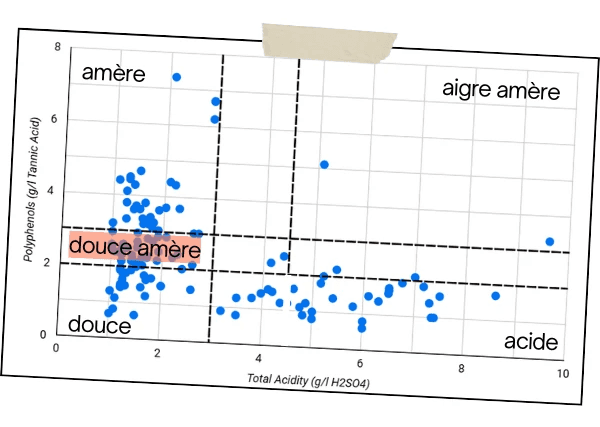
Cider is about achieving the perfect balance of:
Sugars → Ferment into alcohol (higher sugar = stronger cider)
Acidity → Adds crispness (too much = harsh, too little = flat)
Tannins → Provide body, bitterness & complexity (usually coming from bitter, bitter sweet and bitter sharp apples)
Fermentation/Alcohol Potential
The apple’s natural sugar content determines how much alcohol can be produced.
Sugar level is measured with a densimeter. Density (aka SG) usually varies from 1040 to 1090. 1040 SG has the potential of 4.5% Alc., 1080 SG has the potential of 11.6% Alc. if all sugar are fermenting.
Acidity is the First Line of Defense
Lower pH (higher acidity) = More Protection.
Apples with high acidity (sharps apples) naturally inhibit spoilage bacteria like Acetobacter. Low-acid apples (like some bittersweets) can create an environment where unwanted bacterias thrive, leading to off-flavors or spoilage. Cider apples ph goes from 2.9 to 4.5. Protection comes with a ph of 3.6 or lower.
Why Does Nitrogen Matter?
Nitrogen has no impact on actual flavors but its a key element for fermentation. It basically acts as fuel for the yeast. Nitrogen in freshly pressed apple is from 60 to 330 mg/l. It will varies depending on the apple variety, soil & nutrient, weather, tree’s age. It’s really important to control nitrogen level for natural effervesence cider.
Orchard Management
Choosing the variety of apples used in your cider has obviously a direct impact at the orchard. Each variety has different resistance level to disease, different way of growing, different yield, different pollination, different harvest dates. All of these are extremely important and need to be taken into consideration if you are growing your own cider apples.
The reason #6
The many reasons that will make you chose an apple that is horrible to grow over a similar one much easier: your personal preference, the taste, the name, the color, the shape.... Loving an apple is the best reason to transform it into cider.
Choosing your apples for cider making is much more than a technical step: it's the very heart of creation. Each fruit brings its own personality — sweetness, liveliness, complexity — and it's in the harmony of these differences that a great cider is born.
Beyond the numbers and balances, there remains a simple truth: the best cider always comes from the apples you love to work with and savor. So, make your choices with precision... and with passion.

